
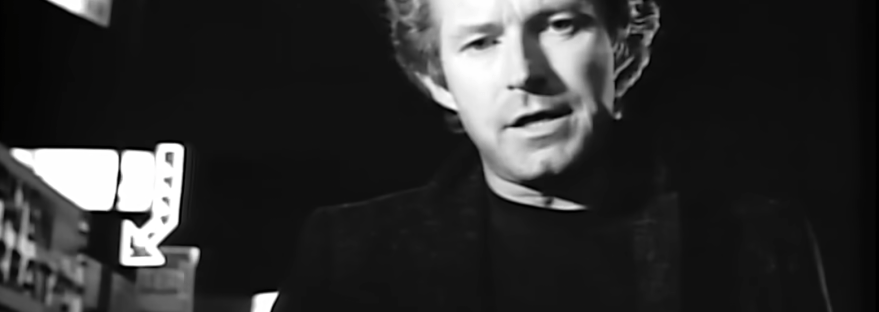
Don Henley’s 1984 single “Boys of Summer” wasn’t supposed to resonate with people like us. At Bennington, where Fugazi, Public Enemy, and the Lunachicks were the baseline for cool, Henley represented corporate rock. The Eagles and their offshoots were the music of our parents, both embarrassing and obsolete. And yet the song would circulate quietly especially among writers. Bret Easton Ellis, some years ahead of me, references it repeatedly in his work and on his podcast, and friend, late music writer Marc Spitz, once wrote an entire meditation on the exact moment in autumn when it becomes acceptable to play “Boys of Summer” again—an unofficial signal that summer has ended. A kind of Groundhog Day for post-punks.
Henley had to have been the least cool musician imaginable to be blasting around campus. If you played Lionel Richie, you might at least get points for irony. But “Boys of Summer” wasn’t ironic. Maybe that was the problem. Nobody wanted to be dragged back to high school—so distant, yet only a few years past.
The video, for anyone who came of age in the 1980s, is as emblematic of MTV as anything Michael Jackson or Mötley Crüe released, but it’s more restrained, more adult. Directed by fashion photographer Jean-Baptiste Mondino, it fuses French New Wave detachment with the cold beauty of a Herb Ritts photograph, all acid-washed in regret. Still, none of those qualities alone explain why its hold, which is both emotional and distant.
The power in the song lies in the collision between lyrics and image. There’s a narrative, but you have to reach for it, across a reservoir of yearning and a love of the past that resists nostalgia. It’s the sensation of flinching at a path not taken—the memory of a love abandoned—stretched across almost five minutes. When you’re listening to “Boys of Summer,” it feels like the best song ever written. When you’re watching the video, it feels like the best video ever made.
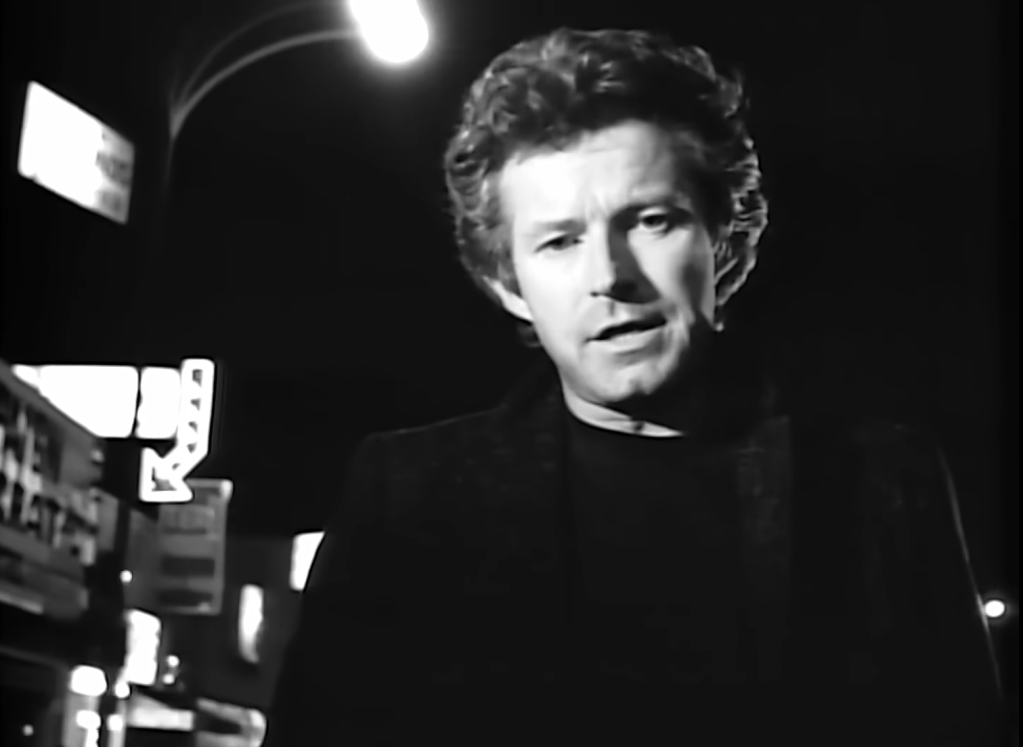
The now iconic clip invites interpretation. The bored high school beauty, Southern California heat amplifying her restlessness. The Chippendale torsos springing skyward like whales breaching water. At its center, a middle-aged man (played by fellow Eagle Glenn Frey) at his desk, grimacing before daring to look over his shoulder, where a screen flashes scenes from his past: career chosen over love, now reimagined as a romantic beach montage dissolving into sunset. But, as Hemingway reminds us, the sun also rises.
This is confessional writing and film-making. Not just of an individual. Each failure stands in for a generational compromise. Out on the road today, I saw a Deadhead sticker on a Cadillac. The line neatly dismantles Bryan Adams’s “Summer of ’69,” its glossy, more calculated doppelgänger. Henley’s lyric embodies a punk sentiment, pushed to its most ironic endpoint when 90s band The Ataris rewrote it as: Out on the road today, I saw a Black Flag sticker on a Cadillac—adding a layer of inherited damage.
That’s why the song resonates with people like Marc and me, who always thought of ourselves as countercultural. “Boys of Summer” is punk in spirit. It’s also folk, and rock. Genre doesn’t matter, because the power doesn’t come from Henley—it comes from the listener, who can hear the song at sixteen and fully inhabit it decades later.
Or maybe that’s too generous. Aging doesn’t require growing old. You’re aging from birth. Writers may simply be more vulnerable to the sweetness and danger of loss.
Henley wasn’t the first pop musician to write about aging. Pete Townshend had been circling it for years, most explicitly in “Slit Skirts” — a far cry from his youthful battle cry: I hope I die before I get old. But “Boys of Summer” has more in common with the Pretenders’ wrenching “Back on the Chain Gang,” with its ache for people who won’t, or can’t, return. Taylor Swift, more recently, has built an entire catalog of lost ages, each memory a time bomb waiting to detonate. It’s hard not to hear echoes of “Boys of Summer” in “Seven” or “August.” Still, she exists far from Bennington in the 1980s, from a generation that treated corporate platforms as a failure of principals.

But many Bennington-adjacent works—Less Than Zero among them—were products of conglomerates. That doesn’t weaken them. It proves that platform doesn’t determine meaning. It was true of MTV in 1984, and it’s true here. Henley has been a wealthy musician for most of his life. He’ll never have underground credibility. But memory erases those distinctions. In the past, where we converge more than we diverge, it all becomes irrelevant.
At Bennington, looking more Eagles than Black Flag, I remember being supremely uncool—and too young, too troubled by the present to indulge even in borrowed nostalgia. The song matters more to me now because it mattered then. It’s a prism, refracting pain into something manageable. The boys of summer—unaging, eternally attractive. Autumn is when things harden, when we see who perseveres, summer’s romance turning brittle and brown like an unraked leaf.
We leave our DNA in the past, and songs like “Boys of Summer” uncover it. Those days are gone forever is the essential lie—of the song and of memory. Just as the mind invents the present, it lets us live inside an idealized past. Favoring that over Gatsby’s orgastic future, in the sepia-toned video, Henley lip-syncs from the bed of a pickup truck, Sunset Boulevard’s neon receding behind him, the sun having set long ago.
For more tales of young woe, buy my 80s memoir Strange as Angels here, or, just for you, download the PDF free here.


 Matt Henderson Ellis