Music Videos

The Mimetic Desire of Beach House’s Fan Video for “Myth”

There is something romantic about driving alone in America and listening to the radio. The vastness of the freeways and interstates; the kitsch of roadside motels and restaurants. Landscapes pass in front of the windshield like the setting of a home movie you are filming. Every expedition participates in a mythos that’s been alive since the inception and conquest of the country, with its unstoppable and violent westward pull.

That draw to the road — the liminal space between sprawl and highway — finds its way into the poetry of Beach House’s ethereal “Myth.” Beach House is a band that makes few promotional videos, instead finding life on YouTube through live performances and fan-made edits. In that sense, fans have become creative partners. The creator behind one fan video for “Myth” pinpointed an unlikely intersection with Wim Wenders’ wrenching film Paris, Texas, crafting an edit that elevates both the visuals and the song to a place that feels at once concrete and euphoric — something an official video likely couldn’t achieve.

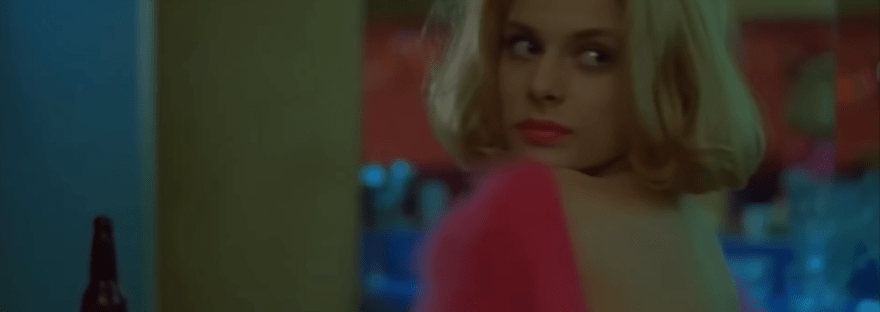
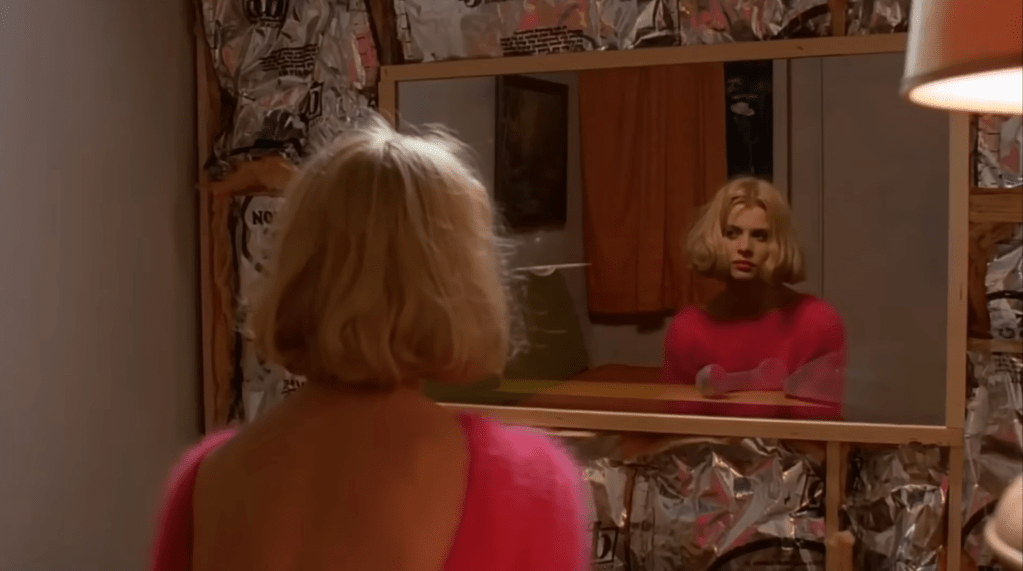
The climactic moment — the emotional catharsis — of the film comes when Jane (Natassja Kinski), a peepshow model, realizes the man who has been paying to speak to is her estranged husband, who had been wandering the desert for years, trying to understand why she abandoned him and their child. He speaks to her through a phone, separated by a one-way mirror, extracting her story while concealing his identity. It’s an unusual use of a screen — not as a third-party intermediary, as our phones and monitors often are, but as a barrier. In a way, it feels more honest. There’s the conversation beneath the conversation, the unspoken realization, and then the rush of clarity as her life catches up with her in a single moment. And in that instant, the screen is no longer a barrier. What exists between them is conjured again — a third, living thing.

Which brings me back to driving. It’s a raw experience, but still mediated by a screen — in this case, the windshield. Because it’s two-way, the experience feels less solipsistic. Now, instead of a film soundtrack, Beach House’s “Myth” is playing — a melding of song and image. “Drifting in and out / see the road you’re on.”
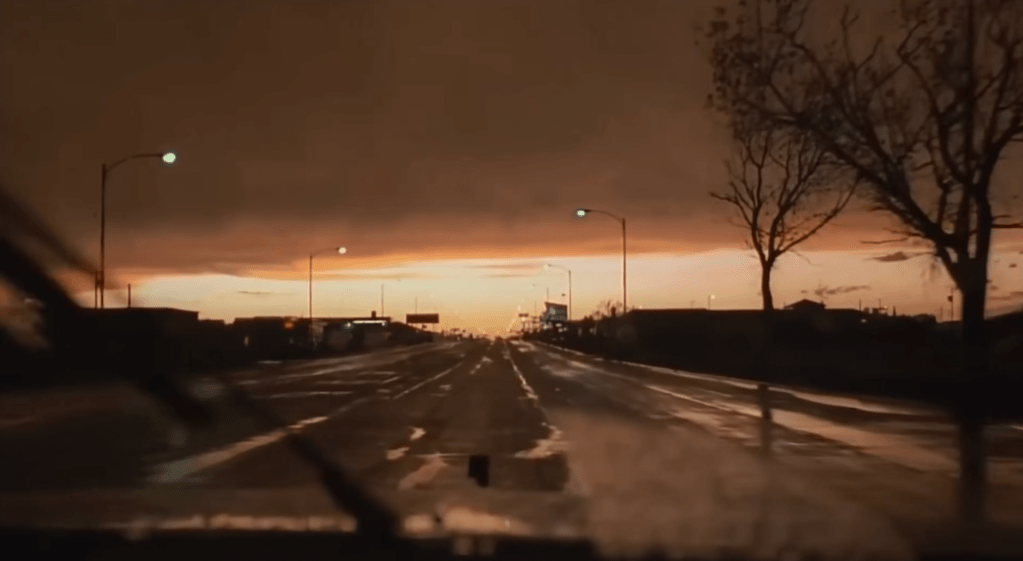
The mimetic desire of screens — the desire created when something is mediated to us through technology or another person — take on another dimension here. The circuit opens. Fan videos have this effect. Seeing the essence of a film like Paris, Texas edited down to mirror the emotional landscape of a song carries not just the force of the original work, but also the creator’s attachment to it. There’s a certain genius in this kind of fan video. The convenient portmanteau “fanvid” has been around for a while, but it feels like it’s emerging as an underground art form. The best fanvids function as commentary, distilling films into emotional beats that, combined with music, reimagine the original. The anonymous creator’s taste becomes the prevailing aesthetic. In this way, they resemble a good DJ — curating the point of creation.

“Myth” has inspired a number of these fanvids. It’s a testament to both the song and the form that Buffalo ’66 can briefly feel like a better film than it is. The fanvid isolates the filmmaker’s intent, even if the original was weighed down by narcissism. The impulse remains pure, and the edit refines it. For a moment, it makes you want to revisit the film, despite remembering it as an aimless mess.

But it’s Paris, Texas where the pairing feels inevitable. Written by Sam Shepard, the film embodies themes that run through the American underbelly: dependence, alienation, commodified desire. A person driven to escape unbearable longing by exiling himself from society, only to be pulled back to its source. The desolation of abandoning a family. The transactional intimacy of a peepshow booth.
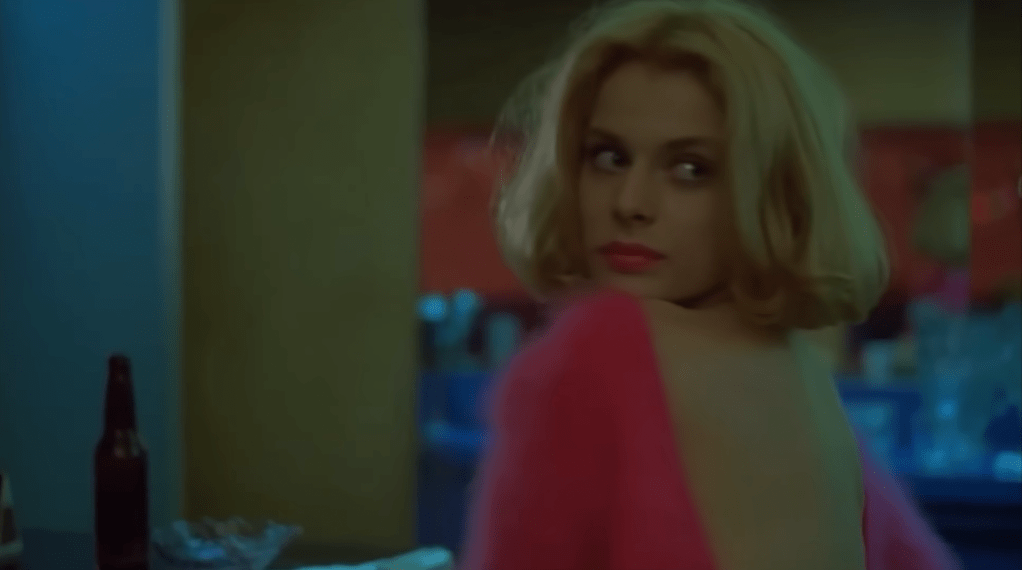
Mimetic desire offers the strange pleasure of inhabiting the longings of others. It lets you shed responsibility — the weight of your own appetites — by experiencing it at a remove. A painting of loneliness, like a Hopper, isn’t beautiful because loneliness is beautiful, but because the circuit is open and connection becomes possible. Maybe that’s what art is for. Or maybe that’s unanswerable. Here, the creators of the song and the film — along with the fan editor — create something reciprocal. A supercut of emotional beats that buttress the song, which is all crescendo. A kind of fan fiction with only the essential moments preserved.

In the end, it’s an intellectual exercise, the fanvid. Like writing, it’s intuitive, but also deliberate.

 “Myth” is all crescendo, all catharsis, all payoff. The opening flutters in the ear like the beating wings of a bird in flight. Nastassja Kinski spinning on the beach. Harry Dean Stanton showing how to wear a mustache. It becomes the soundtrack to the undefined spaces between emotions — between heartache and breakdown, between love and violence. A place language fails but music finds. Few songs are this affecting, making good on the promise of Galaxie 500, or something dreamt between Just Like Heaven and My Bloody Valentine. How Beach House is still considered underground is a mystery, given how consistently their music connects.

What it means — who can say? Beauty is its own meaning, its own justification. Maybe there’s something fascistic in that idea, but it feels true. Beauty should be a little tyrannical, a little fearsome. Works like “Myth” and Paris, Texas are cracks where the light gets in.

Click here for the fanvid, which has not enabled permissions for embedding.

Download my music memoir Strange as Angels, here.
Music Videos

Don Let the Sun Go Down on Me: Don Henley’s “Boys of Summer” Video

Don Henley’s 1984 single “Boys of Summer” wasn’t supposed to resonate with people like us. At Bennington, where Fugazi, Public Enemy, and the Lunachicks were the baseline for cool, Henley represented corporate rock. The Eagles and their offshoots were the music of our parents, both embarrassing and obsolete. And yet the song would circulate quietly especially among writers. Bret Easton Ellis, some years ahead of me, references it repeatedly in his work and on his podcast, and friend, late music writer Marc Spitz, once wrote an entire meditation on the exact moment in autumn when it becomes acceptable to play “Boys of Summer” again—an unofficial signal that summer has ended. A kind of Groundhog Day for post-punks.

Henley had to have been the least cool musician imaginable to be blasting around campus. If you played Lionel Richie, you might at least get points for irony. But “Boys of Summer” wasn’t ironic. Maybe that was the problem. Nobody wanted to be dragged back to high school—so distant, yet only a few years past.

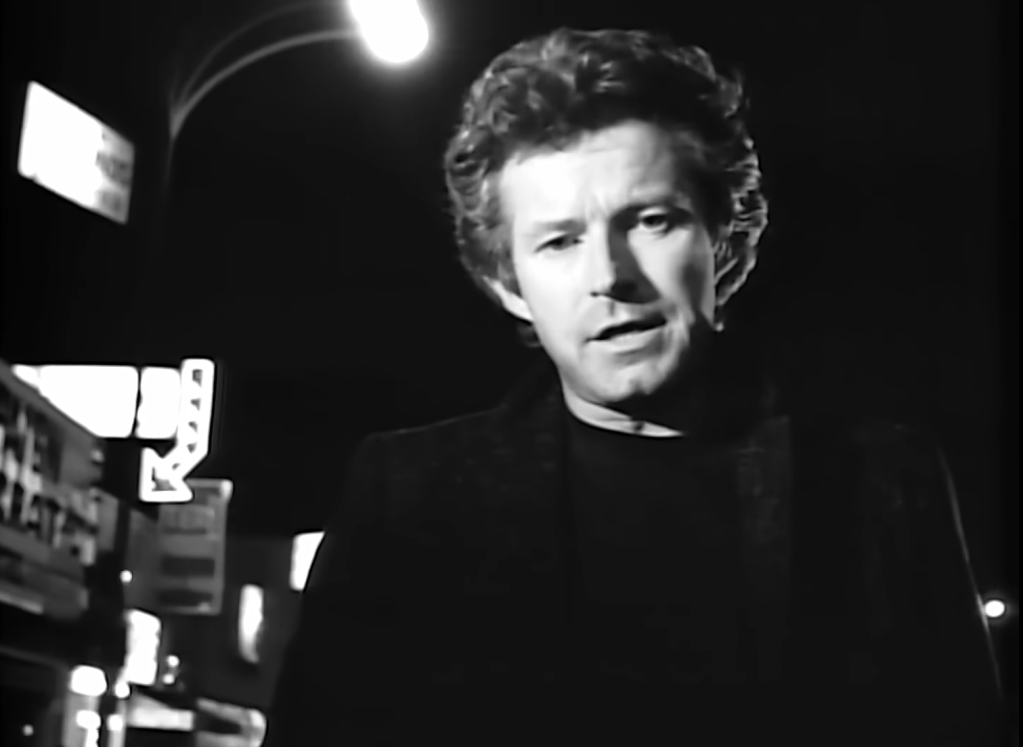
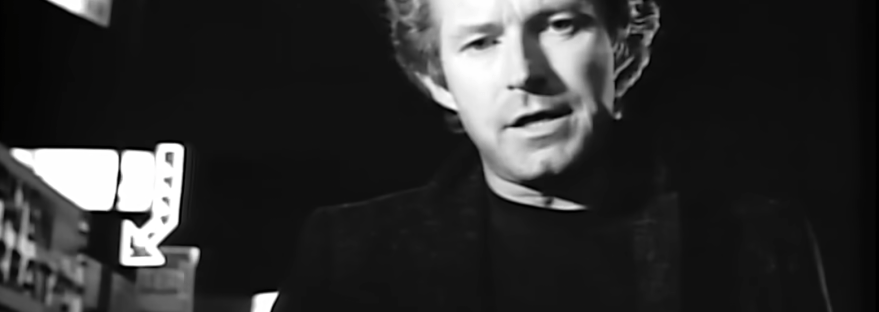
The video, for anyone who came of age in the 1980s, is as emblematic of MTV as anything Michael Jackson or Mötley Crüe released, but it’s more restrained, more adult. Directed by fashion photographer Jean-Baptiste Mondino, it fuses French New Wave detachment with the cold beauty of a Herb Ritts photograph, all acid-washed in regret. Still, none of those qualities alone explain why its hold, which is both emotional and distant.

The power in the song lies in the collision between lyrics and image. There’s a narrative, but you have to reach for it, across a reservoir of yearning and a love of the past that resists nostalgia. It’s the sensation of flinching at a path not taken—the memory of a love abandoned—stretched across almost five minutes. When you’re listening to “Boys of Summer,” it feels like the best song ever written. When you’re watching the video, it feels like the best video ever made.

The now iconic clip invites interpretation. The bored high school beauty, Southern California heat amplifying her restlessness. The Chippendale torsos springing skyward like whales breaching water. At its center, a middle-aged man (played by fellow Eagle Glenn Frey) at his desk, grimacing before daring to look over his shoulder, where a screen flashes scenes from his past: career chosen over love, now reimagined as a romantic beach montage dissolving into sunset. But, as Hemingway reminds us, the sun also rises.

This is confessional writing and film-making. Not just of an individual. Each failure stands in for a generational compromise. Out on the road today, I saw a Deadhead sticker on a Cadillac. The line neatly dismantles Bryan Adams’s “Summer of ’69,” its glossy, more calculated doppelgänger. Henley’s lyric embodies a punk sentiment, pushed to its most ironic endpoint when 90s band The Ataris rewrote it as: Out on the road today, I saw a Black Flag sticker on a Cadillac—adding a layer of inherited damage. 

That’s why the song resonates with people like Marc and me, who always thought of ourselves as countercultural. “Boys of Summer” is punk in spirit. It’s also folk, and rock. Genre doesn’t matter, because the power doesn’t come from Henley—it comes from the listener, who can hear the song at sixteen and fully inhabit it decades later.

Or maybe that’s too generous. Aging doesn’t require growing old. You’re aging from birth. Writers may simply be more vulnerable to the sweetness and danger of loss.

Henley wasn’t the first pop musician to write about aging. Pete Townshend had been circling it for years, most explicitly in “Slit Skirts” — a far cry from his youthful battle cry: I hope I die before I get old. But “Boys of Summer” has more in common with the Pretenders’ wrenching “Back on the Chain Gang,” with its ache for people who won’t, or can’t, return. Taylor Swift, more recently, has built an entire catalog of lost ages, each memory a time bomb waiting to detonate. It’s hard not to hear echoes of “Boys of Summer” in “Seven” or “August.” Still, she exists far from Bennington in the 1980s, from a generation that treated corporate platforms as a failure of principals.

But many Bennington-adjacent works—Less Than Zero among them—were products of conglomerates. That doesn’t weaken them. It proves that platform doesn’t determine meaning. It was true of MTV in 1984, and it’s true here. Henley has been a wealthy musician for most of his life. He’ll never have underground credibility. But memory erases those distinctions. In the past, where we converge more than we diverge, it all becomes irrelevant.

At Bennington, looking more Eagles than Black Flag, I remember being supremely uncool—and too young, too troubled by the present to indulge even in borrowed nostalgia. The song matters more to me now because it mattered then. It’s a prism, refracting pain into something manageable. The boys of summer—unaging, eternally attractive. Autumn is when things harden, when we see who perseveres, summer’s romance turning brittle and brown like an unraked leaf.

We leave our DNA in the past, and songs like “Boys of Summer” uncover it. Those days are gone forever is the essential lie—of the song and of memory. Just as the mind invents the present, it lets us live inside an idealized past. Favoring that over Gatsby’s orgastic future, in the sepia-toned video, Henley lip-syncs from the bed of a pickup truck, Sunset Boulevard’s neon receding behind him, the sun having set long ago.

For more tales of young woe, buy my 80s memoir Strange as Angels here, or, just for you, download the PDF free here.

Music Videos, Uncategorized

A Subtle Haunting: Lana Del Rey’s “Flipside” Video


In the summer before the pandemic, I’d taken to boxing with more seriousness. But unlike Thailand, where joining a fight gym was a way of life and could easily consume entire days, in Budapest lessons were offered piecemeal. A few hours a week wasn’t enough. So I’d put on my twelve-ounce gloves and take out my aggression on the enormous ceramic furnace in my rented bedroom, aiming at the corner to approximate body shots and hooks. Each strike, loud and flush as a handclap, sent shockwaves through my arms and down my spine. Still, I kept digging at it, this unmovable object, until I felt my wrist begin to give under the stress.

I was fresh off six months of fight training, eager to return to Thailand for what I hoped would be my second Muay Thai bout. Between relationships—ending one in memory and beginning another in real time, so many times I fell asleep and woke up to Lana Del Rey’s smoldering lo-fi torch song “Flipside.”

Lana Del Rey, “Flipside”


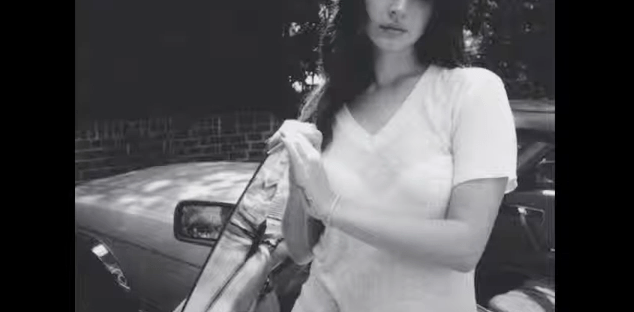
“Flipside,” written with Blake Stranathan, is a Del Rey rarity: never released on an album, and usually available only through fan-uploaded videos. The most familiar one features the cover of her album Ultraviolence, a black-and-white shot of the singer standing before a vintage Mercedes coupe, her gaze confrontational. The raw, minimalist image feels like an analog snap from a hot, uneventful summer where something should have happened but never did. A mugshot of youth, whose only crime was dwelling on heartache.

You can hardly call it a music video. More a kinetic film still: Del Rey contained by the frame, unmoving but alive. It works because the song is so emotionally potent that it needs nothing but a signature image. “Flipside” resonates in negative space—from the opening chords, high-tensile and precarious, like the breath held at the edge of a precipice before falling or righting yourself. The prowling bassline (the track has no drums) is taut with anticipation, damage waiting to happen. Its delicate structure becomes a web that catches every last overflow of pain, along with the self-importance that pain enables.

It’s a winning track. The terrain Del Rey explores on “Flipside” aligns less with contemporary pop divas and more with rogue artists like Greg Dulli and Sun Kil Moon, with a streak of LA noir that invokes Chandler, Welles, Veronica Lake, Charles Bukowski, James Ellroy, and any number of strip-club torch songs. The undertow of emotional violence a tug and then a pull into deeper waters.

To appreciate Lana Del Rey is, in many ways, to be a fan of American crime fiction. She didn’t fully come into her own until she moved to Southern California, though it always felt as if she had been writing LA noir since Born to Die. A new location can be liberating, and LA is a city alive with tragic narratives to inhabit. On Ultraviolence, she becomes less femme fatale than femme noir—a distillation of dark Americana. “Flipside” turns that violence inward: Are you gonna hurt me now / or are you gonna hurt me later? Few of her contemporaries—except perhaps Courtney Love—render emotional self-harm so convincingly. Pain hurts more in the hothouse of memory.

2.

In Budapest, itself a noir city, I compulsively listened to the song while having an affair with a younger, taken woman. Rita, a writer and fellow cafe dweller, would sneak out of her boyfriend’s apartment to meet me in a cemetery or in the park behind the library. Everything felt urgent. With the prospect of a ring fight fading, I put that energy into her. Winning her felt like my own form of ruthlessness, a triumph both hollow and satisfying.

Six months later, the world was in lockdown. Del Rey’s Southern California couldn’t have been farther from the icy Budapest winter. Rita and I had moved in together in the autumn. We both quickly realized it was a mistake we had rushed headlong into; and for me, the pain of it arrived almost immediately. Without the tension—the illicit danger—of her ex, the relationship collapsed under misaligned expectations and the claustrophobia of proximity.

I retreated into music, as I always did when suffering. Rita was intuitive enough to indulge this, buying Del Rey’s newly released Norman Fucking Rockwell! on vinyl for my birthday. Sometimes I wondered if she gave it to me as a substitute, knowing how much she disliked Del Rey.

Rita contributed a turntable to our life together, and I made good use of it. The album, pressed on pink vinyl, looked like a bubble-gum whirlpool. It reminded me of a scene from Haruki Murakami’s overlooked novel Sputnik Sweetheart, where a record needle devours a Louis Armstrong album like a greedy LA nose snorting an endless line of coke. Or maybe I’ve invented that memory. It feels appropriate either way.

The songs on Norman Rockwell are memoir-esque: distilled pathos without stooping to narrative. Untold backstory, suicide ideation, trauma bonding over the airwaves. Bring your own narrative, and it will fit. The story lies in the emotional unfolding—disintegrating and regenerating only to collapse again. Only: who owns the catharsis: the performer or the audience? During lockdown, narrative didn’t need to make sense. The world was paused; the music kept moving.

Lana Del Rey, Norman F****** Rockwell on vinyl

3.

One virtue of getting older is no longer needing to venerate artists for anything but talent. You don’t have to identify with or emulate anyone. It’s freeing—especially after years of disappointment with sulky firebrand Morrissey. You can just admire Del Rey as a kind of bomber-pinup muse of destruction, equal parts Aphrodite and Kali. (America has always wanted to burst out of its monotheism—Joseph Smith to Scientology—hungering for more lore, more imagination, a Hollywood ending to religion.)


But in Rita, I encountered a stronger, more sexually assured force. Training was impossible; my energy rerouted into distance runs, panting into a face mask. Without fighting, without writing, locked inside with an increasingly painful relationship, defeat turned inward.


So I filled the growing void with Del Rey. The album held dark pathos but also escape—sun, open air, California beaches. The pink vinyl was sensual: a slice of rare tenderloin, labial, a beautiful maw. There was no denying the sexuality of it. Maybe overplaying it was a small act of revenge, until Rita finally asked me not to play it when she was home.

In pain, I closed inward. Rita did the opposite—radiating outward, making friends, letting men believe they had a chance with her. She was more present for men she had no interest in than for me, the one sleeping in her bed. She was there, but absent.

4.


Are you gonna hurt me now? / Or are you gonna hurt me later?


I choose both, thanks.


Not long after lockdown ended—though too long, really—I moved out. I left Norman Fucking Rockwell! behind with Rita. Maybe as revenge, rejecting a gift I had internalized too deeply. But “Flipside” wasn’t something I could leave. It wasn’t tied to any album. It lived in the ether, or YouTube, re-uploaded whenever it vanished. After moving to a larger apartment alone, the song took on new meaning, haunting but delicate, providing a template on how to love someone who wasn’t there.


In that dark Pest apartment, Del Rey’s voice felt like the haunted Santa Ana winds: alive with something beyond its elemental force. If it was invention, that was fine. Language is invention too, puffed with our own projections. A ghost is not an absence but what the absence generates—Spotify wrapped in a sheet with eyes cut out.


To get the song out of my head, I started outlining a novel inspired by it, filling it with my own heartache. Researching the title on Goodreads, I discovered the actor James Franco had already claimed Flipside for a book of interviews with Del Rey, both real and invented, apparently hoping to conjure his own phantom muse. I never wrote my book. Franco’s was never released. Lana, present as she is as an object of inspiration, eluded both our interpretations.

In Mexico now, a place as carnal, violent, and haunted as any noir setting, “Flipside” drifts through me like a familiar spirit. I hear its echo in “La Llorona,” another song about loving what is beyond reach. But unlike before, the haunting feels companionable. Maybe that’s all a ghost is: our own impression in the shape of the departed. I’m alone, and for once it feels like presence—not absence—with only my sensitivity, and a single still from “Flipside,” keeping quiet watch.

More takes of woe and music in my 80´s memoir, Strange as Angels, for Kindle or, Strange as Angels as a free PDF.

Into noir and writing? Check out my posts for How to Watch Shadow of a Doubt as a crime writer, How to Watch Double Indemnity, and Get Shorty on my editing site, Word Sleuth.