
Music Videos

The Mimetic Desire of Beach House’s Fan Video for “Myth”

There is something romantic about driving alone in America and listening to the radio. The vastness of the freeways and interstates; the kitsch of roadside motels and restaurants. Landscapes pass in front of the windshield like the setting of a home movie you are filming. Every expedition participates in a mythos that’s been alive since the inception and conquest of the country, with its unstoppable and violent westward pull.

That draw to the road — the liminal space between sprawl and highway — finds its way into the poetry of Beach House’s ethereal “Myth.” Beach House is a band that makes few promotional videos, instead finding life on YouTube through live performances and fan-made edits. In that sense, fans have become creative partners. The creator behind one fan video for “Myth” pinpointed an unlikely intersection with Wim Wenders’ wrenching film Paris, Texas, crafting an edit that elevates both the visuals and the song to a place that feels at once concrete and euphoric — something an official video likely couldn’t achieve.

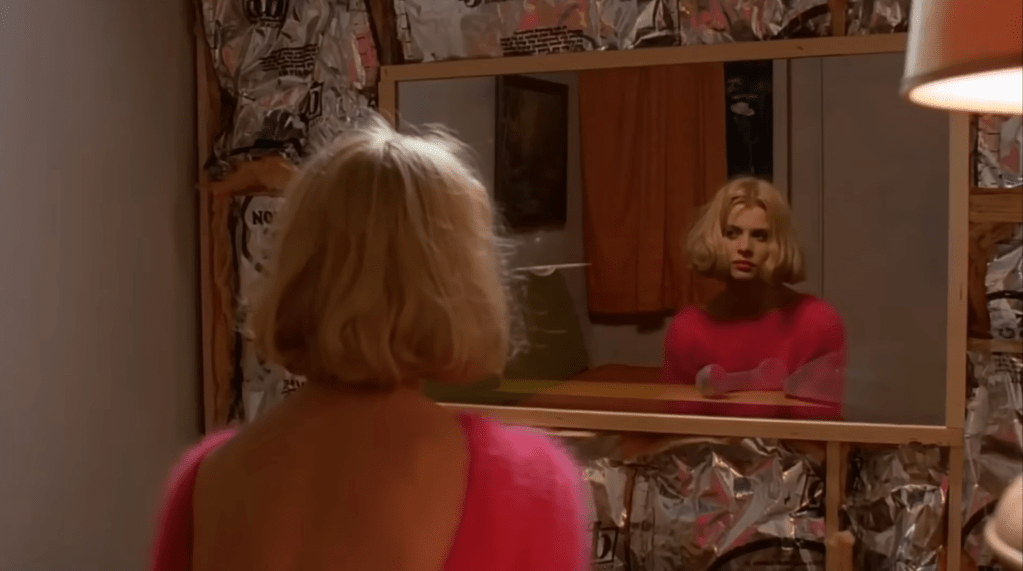
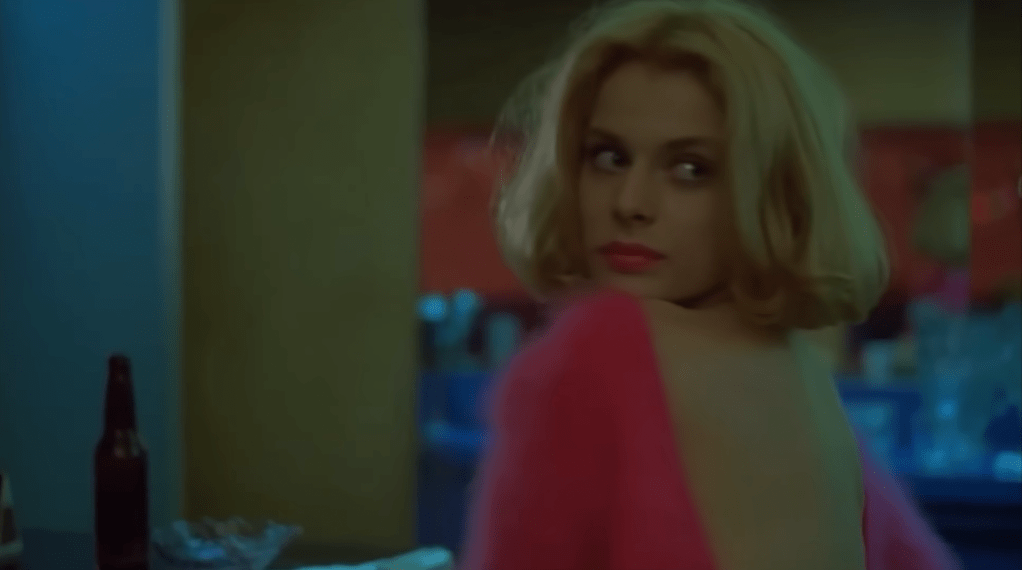
The climactic moment — the emotional catharsis — of the film comes when Jane (Natassja Kinski), a peepshow model, realizes the man who has been paying to speak to is her estranged husband, who had been wandering the desert for years, trying to understand why she abandoned him and their child. He speaks to her through a phone, separated by a one-way mirror, extracting her story while concealing his identity. It’s an unusual use of a screen — not as a third-party intermediary, as our phones and monitors often are, but as a barrier. In a way, it feels more honest. There’s the conversation beneath the conversation, the unspoken realization, and then the rush of clarity as her life catches up with her in a single moment. And in that instant, the screen is no longer a barrier. What exists between them is conjured again — a third, living thing.

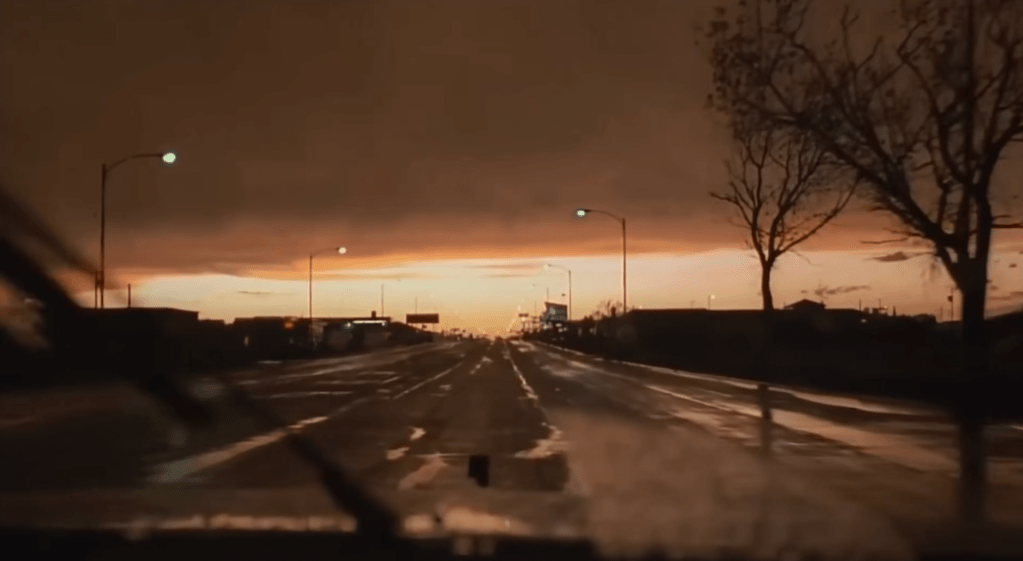
Which brings me back to driving. It’s a raw experience, but still mediated by a screen — in this case, the windshield. Because it’s two-way, the experience feels less solipsistic. Now, instead of a film soundtrack, Beach House’s “Myth” is playing — a melding of song and image. “Drifting in and out / see the road you’re on.”
The mimetic desire of screens — the desire created when something is mediated to us through technology or another person — take on another dimension here. The circuit opens. Fan videos have this effect. Seeing the essence of a film like Paris, Texas edited down to mirror the emotional landscape of a song carries not just the force of the original work, but also the creator’s attachment to it. There’s a certain genius in this kind of fan video. The convenient portmanteau “fanvid” has been around for a while, but it feels like it’s emerging as an underground art form. The best fanvids function as commentary, distilling films into emotional beats that, combined with music, reimagine the original. The anonymous creator’s taste becomes the prevailing aesthetic. In this way, they resemble a good DJ — curating the point of creation.

“Myth” has inspired a number of these fanvids. It’s a testament to both the song and the form that Buffalo ’66 can briefly feel like a better film than it is. The fanvid isolates the filmmaker’s intent, even if the original was weighed down by narcissism. The impulse remains pure, and the edit refines it. For a moment, it makes you want to revisit the film, despite remembering it as an aimless mess.

But it’s Paris, Texas where the pairing feels inevitable. Written by Sam Shepard, the film embodies themes that run through the American underbelly: dependence, alienation, commodified desire. A person driven to escape unbearable longing by exiling himself from society, only to be pulled back to its source. The desolation of abandoning a family. The transactional intimacy of a peepshow booth.
Mimetic desire offers the strange pleasure of inhabiting the longings of others. It lets you shed responsibility — the weight of your own appetites — by experiencing it at a remove. A painting of loneliness, like a Hopper, isn’t beautiful because loneliness is beautiful, but because the circuit is open and connection becomes possible. Maybe that’s what art is for. Or maybe that’s unanswerable. Here, the creators of the song and the film — along with the fan editor — create something reciprocal. A supercut of emotional beats that buttress the song, which is all crescendo. A kind of fan fiction with only the essential moments preserved.

In the end, it’s an intellectual exercise, the fanvid. Like writing, it’s intuitive, but also deliberate.

 “Myth” is all crescendo, all catharsis, all payoff. The opening flutters in the ear like the beating wings of a bird in flight. Nastassja Kinski spinning on the beach. Harry Dean Stanton showing how to wear a mustache. It becomes the soundtrack to the undefined spaces between emotions — between heartache and breakdown, between love and violence. A place language fails but music finds. Few songs are this affecting, making good on the promise of Galaxie 500, or something dreamt between Just Like Heaven and My Bloody Valentine. How Beach House is still considered underground is a mystery, given how consistently their music connects.

What it means — who can say? Beauty is its own meaning, its own justification. Maybe there’s something fascistic in that idea, but it feels true. Beauty should be a little tyrannical, a little fearsome. Works like “Myth” and Paris, Texas are cracks where the light gets in.

Click here for the fanvid, which has not enabled permissions for embedding.

Download my music memoir Strange as Angels, here.

peerfume genius and Arpad Miklos
Uncategorized

Perfume Genius’s “Hood” Video and the Freedom of Exposure

It’s easy to focus on the sensational aspects of the Perfume Genius video for their 2013 single “Hood.” There are a lot of them. Foremost, the banning of the advertising clip for the video by YouTube made news outlets from Pitchfork to the Huffington Post. While the subsequent outrage and charges of institutional homophobia failed to get it reinstated, the publicity amplified the video’s reach. Then there’s the semi-nude appearance of beefy Hungarian porn star (and chemist!) Arpad Miklos, who would commit suicide in New York City soon after the video’s release.

“Hood” landed in my life at a time when I, too, felt unrecognizable to myself. I came to this song during one of the most challenging periods of my life: a winter when I was having daily panic attacks, which persisted for months. It was the beginning of what would be a long and dark Central European winter, a place where the sun seemed to fall faster and more definitively than in my former home of Brooklyn. When the sun goes down on a Budapest winter, you feel less certain it will rise again, as though it simply called it quits. Because I’d stopped socializing and going out, for the most part, I used media as a window to the world, and videos like “Hood” became reflections to locate myself within.

Perfume Genius, and the emotional forensics Mike Hadreas brings to their music, became part of my survival mechanism. Alongside red wine, Xanax, and no shortage of music, “Hood” and “Dark Parts”—both directed by Winston H. Case—offered immediate emotional payoffs but also layers of meaning that revealed themselves over time, like the echoes of other queer artists who used vulnerability as a form of defiance.

“Hood” may seem like a simple expression, but it comes with quite complex footnotes. Hadreas was too young to be a part of the ACT UP movement that fought against discrimination and for the acceleration of AIDS treatments, and was also integral to the downtown art scene in New York, enlivening the work of artists like David Wojnarowicz, who lived and died in that reality. Hadreas’s songs are more personal, though that doesn’t make them less of a political statement.

Wojnarowicz, a former street hustler and heroin user, with no formal art education, used art as a lifeline, and despite actively working outside the prevailing establishment, did achieve recognition in his lifetime, and was included in a Whitney Biennial. His 1989 photograph Untitled (Falling Buffaloes), later featured in the ‘Buffalo version’ of U2’s “One” video, remains one of the most devastating visual metaphors for the AIDS crisis. Like those buffalo, so many artists of that era, from Keith Haring to Robert Mapplethorpe, were forced off a cliff by neglect, stigma, and political indifference. Long before “Hood” was banned, Wojnarowicz faced censorship and attempts to defund his shows by politicians at the highest levels of the US government, fighting many of these attacks while succumbing to the ravages of AIDS.

Untitled (Falling Buffaloes) by David Wojnarowicz

The concept of Eros has always embraced both love and death. In Untitled (Falling Buffalos), the death, from having nowhere else to turn, would be echoed in the suicide of Arpad Miklos, who took his own life in a Manhattan apartment just one year after “Hood” was released. It would have been little consolation to me to know that during that winter, as I was hiding from the darkness that provoked my panic attacks, Miklos was apparently suffering much worse and finding fewer places for recourse, living on the fringes of a foreign city.

There are a few things we will never know about Miklos. One is why he killed himself. He stated in his suicide note that he wouldn’t give people the satisfaction (is there any satisfaction to be gathered with that information?); and also why, when he took a second name, he chose one more Hungarian than his original name of Kozma Péter, when historically film creatives have hidden their foreign origins, from Michael Curtiz (born Manó Kaminer) to Harry Houdini (born Erik Weisz).

Like many Hungarian actors, including Bela Lugosi, he came to the States to make his dreams come true, all without speaking a word of English (it was easier in porn; Lugosi had to memorize and phonetically repeat script lines he didn’t understand). In New York, Miklos achieved iconic status in the gay porn industry, where he was also sought after as an escort. Like Lugosi, he’ll be remembered for a bloodsucking role, his in the cult porn romp “The Vampire of Budapest.”

In “Hood,” Miklos plays a Svengali to Mike Hadreas’s doll-like plaything. But as in most relationships, the actual power dynamic can only be known by the participants. What comes off the screen is an intimacy so electric it crackles. Miklos dresses Hadreas up as though he were a toy left out for his pleasure, undresses and redresses him for a photo shoot conducted by an unseen photographer. It’s important to remember there are three people in this relationship, the photographer acting as a stand-in for the viewer. Would it be as erotic for the couple if they were not being watched, if they were not being recorded?

But the real memetic desire comes from the lyrics of the song itself, so vulnerable, addressing a lover in a warning, “You will never call me baby/If you knew me true;” the audience listening in on the confession. Music is, of course, created twice: once by the composer and again in the ear of the listener. Music, like literature, is personal that way.

On a side note, I played the video for Hood for a war-correspondent/writer I was translating when we were in Kyiv, Ukraine, hanging out on 2013 Maidan Square in the days before government snipers fired into the mostly peaceful protest. My colleague was taken by Hood, and it became the soundtrack song to our weekend witnessing history, a time when the urgency of the event lifted me from my own personal pain. We probably weren’t Hadreas’s target audience, but such is the power of music.

I had originally wanted to write about Perfume Genius’s video for “Dark Parts,” which, in its Kill List-esque dark and enigmatic storyline, best expressed my own feelings at the time, excavating persona trauma and dragging it into the light. But something about “Hood” was easier to return to. Maybe because, no matter how bleak its delivery, it carries within it the quiet insistence that life continues.

To close, I’ll say there’s something heroic in “Hood’s” mere existence. The song is about fear of exposure, but gaining power from embracing that fear. The content itself actually loses its power if viewed as salacious. What it is, is tender, intimate, and quietly erotic. Do power dynamics and queer relationships still shock in a post-Call Me by Your Name world? Given our current political climate, maybe don’t answer that.

I discuss Perfume Genius and David Wojnarowicz in more depth in my memoir, Dare and You Win My Heart, which my agent, Madison Smartt Bell, is currently seeking a publisher for.

My playlist for “Hood/Mexico City”

More tales of music and woe in my 80’s memoir Strange as Angels, free on PDF.