
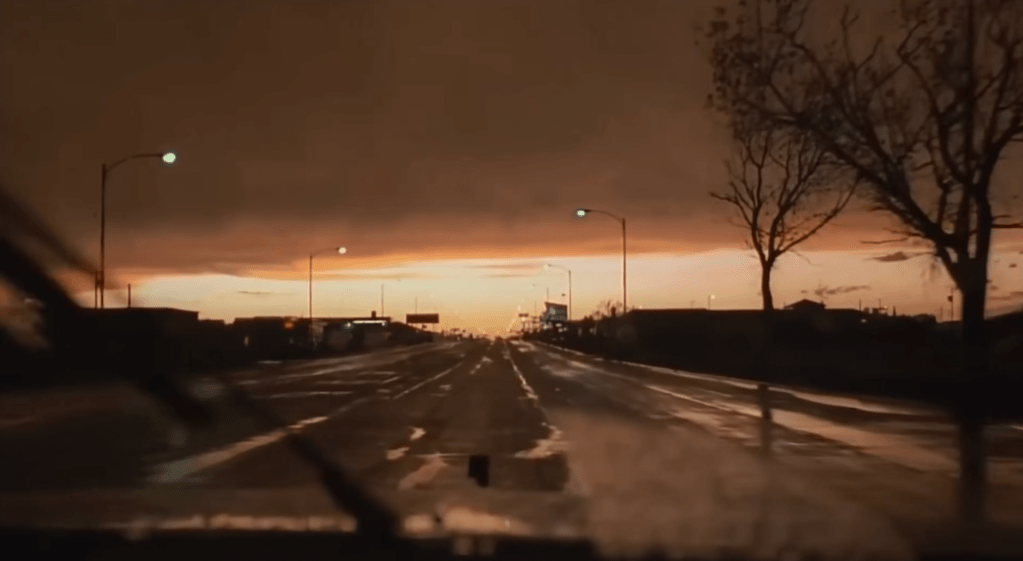
There is something romantic about driving alone in America and listening to the radio. The vastness of the freeways and interstates; the kitsch of roadside motels and restaurants. Landscapes pass in front of the windshield like the setting of a home movie you are filming. Every expedition participates in a mythos that’s been alive since the inception and conquest of the country, with its unstoppable and violent westward pull.
That draw to the road — the liminal space between sprawl and highway — finds its way into the poetry of Beach House’s ethereal “Myth.” Beach House is a band that makes few promotional videos, instead finding life on YouTube through live performances and fan-made edits. In that sense, fans have become creative partners. The creator behind one fan video for “Myth” pinpointed an unlikely intersection with Wim Wenders’ wrenching film Paris, Texas, crafting an edit that elevates both the visuals and the song to a place that feels at once concrete and euphoric — something an official video likely couldn’t achieve.
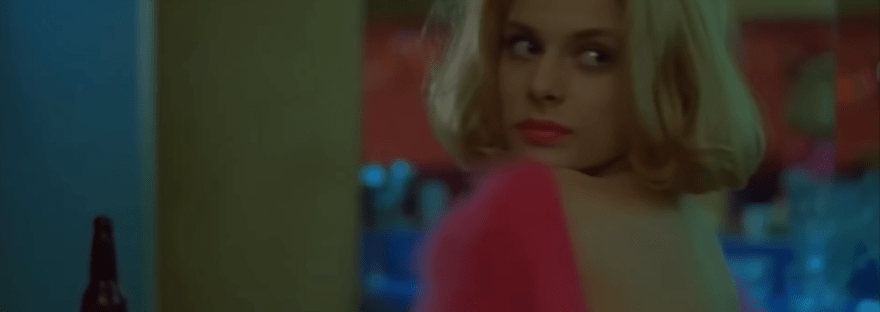
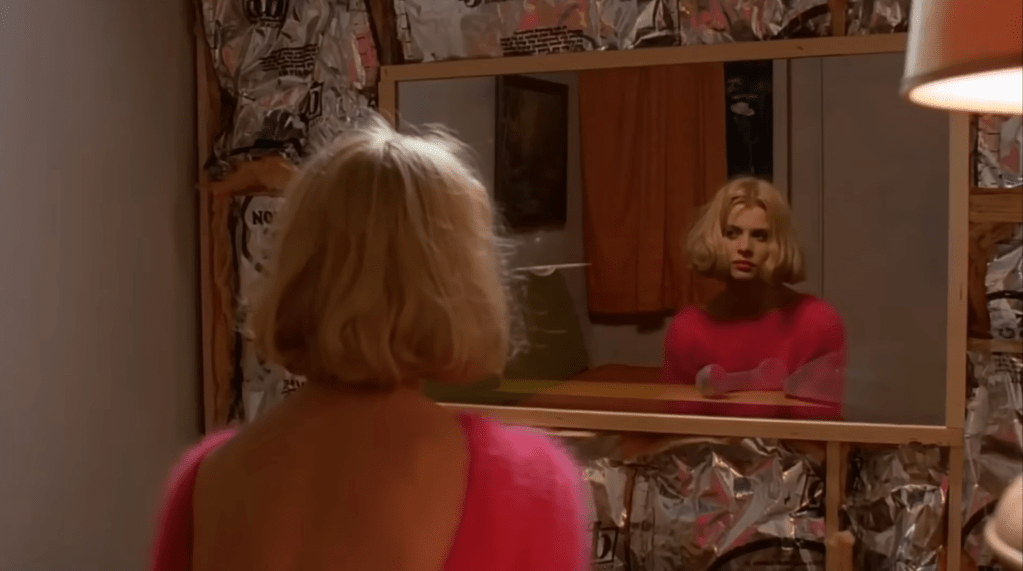
The climactic moment — the emotional catharsis — of the film comes when Jane (Natassja Kinski), a peepshow model, realizes the man who has been paying to speak to is her estranged husband, who had been wandering the desert for years, trying to understand why she abandoned him and their child. He speaks to her through a phone, separated by a one-way mirror, extracting her story while concealing his identity. It’s an unusual use of a screen — not as a third-party intermediary, as our phones and monitors often are, but as a barrier. In a way, it feels more honest. There’s the conversation beneath the conversation, the unspoken realization, and then the rush of clarity as her life catches up with her in a single moment. And in that instant, the screen is no longer a barrier. What exists between them is conjured again — a third, living thing.
Which brings me back to driving. It’s a raw experience, but still mediated by a screen — in this case, the windshield. Because it’s two-way, the experience feels less solipsistic. Now, instead of a film soundtrack, Beach House’s “Myth” is playing — a melding of song and image. “Drifting in and out / see the road you’re on.”
The mimetic desire of screens — the desire created when something is mediated to us through technology or another person — take on another dimension here. The circuit opens. Fan videos have this effect. Seeing the essence of a film like Paris, Texas edited down to mirror the emotional landscape of a song carries not just the force of the original work, but also the creator’s attachment to it. There’s a certain genius in this kind of fan video. The convenient portmanteau “fanvid” has been around for a while, but it feels like it’s emerging as an underground art form. The best fanvids function as commentary, distilling films into emotional beats that, combined with music, reimagine the original. The anonymous creator’s taste becomes the prevailing aesthetic. In this way, they resemble a good DJ — curating the point of creation.
“Myth” has inspired a number of these fanvids. It’s a testament to both the song and the form that Buffalo ’66 can briefly feel like a better film than it is. The fanvid isolates the filmmaker’s intent, even if the original was weighed down by narcissism. The impulse remains pure, and the edit refines it. For a moment, it makes you want to revisit the film, despite remembering it as an aimless mess.
But it’s Paris, Texas where the pairing feels inevitable. Written by Sam Shepard, the film embodies themes that run through the American underbelly: dependence, alienation, commodified desire. A person driven to escape unbearable longing by exiling himself from society, only to be pulled back to its source. The desolation of abandoning a family. The transactional intimacy of a peepshow booth.
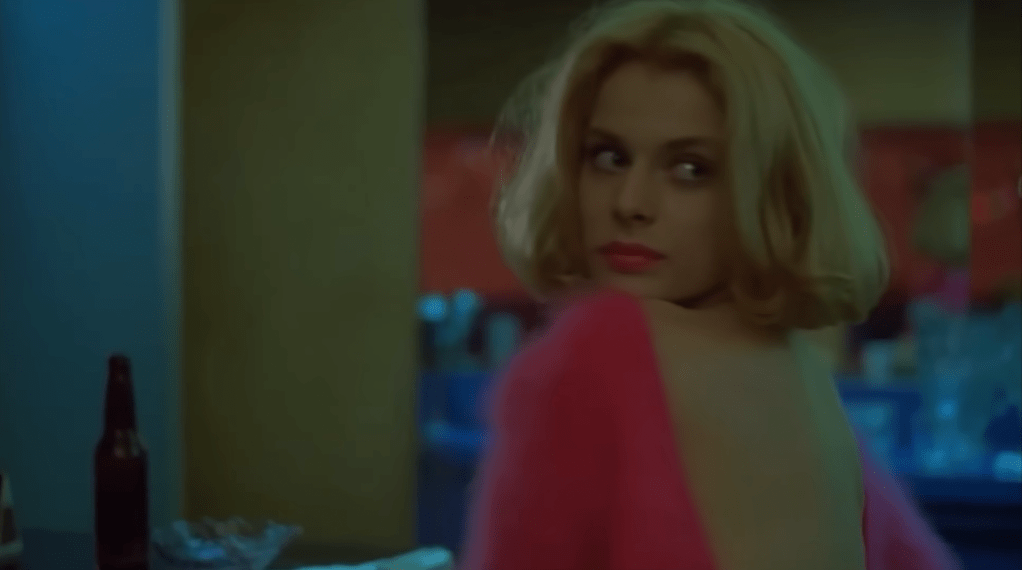
Mimetic desire offers the strange pleasure of inhabiting the longings of others. It lets you shed responsibility — the weight of your own appetites — by experiencing it at a remove. A painting of loneliness, like a Hopper, isn’t beautiful because loneliness is beautiful, but because the circuit is open and connection becomes possible. Maybe that’s what art is for. Or maybe that’s unanswerable. Here, the creators of the song and the film — along with the fan editor — create something reciprocal. A supercut of emotional beats that buttress the song, which is all crescendo. A kind of fan fiction with only the essential moments preserved.
In the end, it’s an intellectual exercise, the fanvid. Like writing, it’s intuitive, but also deliberate.
“Myth” is all crescendo, all catharsis, all payoff. The opening flutters in the ear like the beating wings of a bird in flight. Nastassja Kinski spinning on the beach. Harry Dean Stanton showing how to wear a mustache. It becomes the soundtrack to the undefined spaces between emotions — between heartache and breakdown, between love and violence. A place language fails but music finds. Few songs are this affecting, making good on the promise of Galaxie 500, or something dreamt between Just Like Heaven and My Bloody Valentine. How Beach House is still considered underground is a mystery, given how consistently their music connects.
What it means — who can say? Beauty is its own meaning, its own justification. Maybe there’s something fascistic in that idea, but it feels true. Beauty should be a little tyrannical, a little fearsome. Works like “Myth” and Paris, Texas are cracks where the light gets in.
For others in my series of takes of music videos, see Perfume Genius, Magdalena Bay, Ariel Pink, or Fountains of Wayne.
Click here for the fanvid, which has not enabled permissions for embedding.
Download my music memoir Strange as Angels, here.

